

Apparently, most of us don’t learn about Korean history from a textbook because we are not locals, but K-dramas do not spare us, and honestly, we (I) don’t mind.
We learn from dramas, random references, and those moments where a character casually says something that makes you pause and think, “Wait, what does that mean?”
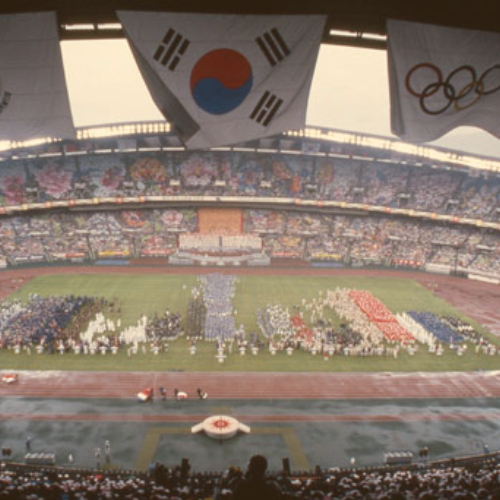
And yeah, one of those moments is the 1988 Seoul Olympics.
It is often mentioned as a milestone, but rarely explained in a way that shows why it actually mattered. So let’s talk about it properly.
Korea Before the Olympics
By the mid-1980s, South Korea had already done something impressive. It had rebuilt itself from the ruins of the Korean War and turned into a fast-growing industrial country. On paper, things looked good, factories were running, exports were booming, and cities were expanding but internally, the country was still tense because Korea was just coming out of years of military rule and the political freedom they were enjoying at the time was still fresh and fragile. In fact, they just got democracy in 1987, barely a year before the Olympics.
So while the world saw economic growth, Koreans were living through uncertainty, exhaustion, and hope all at once.
Why Hosting the Olympics Was a Big Deal
Hosting the Olympics was not just about sports. It was a statement for South Korea, establishing the fact that they are no longer just a war story or a developing country. Also, this was only the second time the Olympics would be held in all of Asia. Japan hosted it in 1964, and Korea hosting it in 1988 placed it in a similar category as Japan, which had held them hostage for years.
However, one thing was that it was risky. The Cold War was still ongoing, and North Korea boycotted the games. There were fears about security and international perception, but Korea pushed forward anyway.
What the Olympics Changed Inside Korea
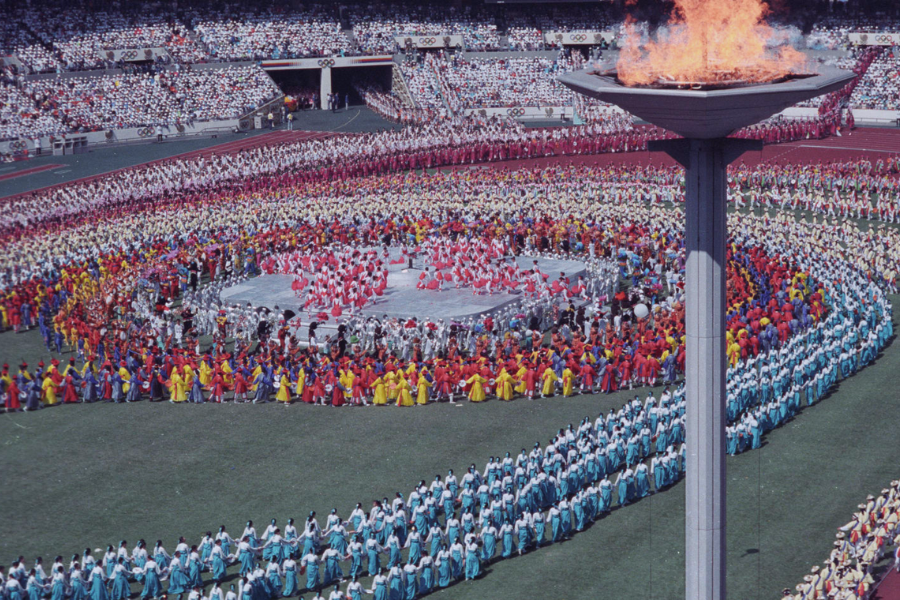
In preparation for the Olympics, Seoul was transformed completely. Roads were expanded, subway lines were completed, and stadiums were built. The city began to look like a modern capital instead of a country still haunted by war memories.
The Olympics became a rare moment of collective pride because locals saw their country on global television, welcoming athletes from all over the world, which meant the beginning of greater achievements for South Korea.
What It Changed for Korea Outside the Country
The 1988 Seoul Olympics changed how the world talked about South Korea. Before then, Korea was often grouped into vague narratives about conflict and poverty, but after the Olympics, curiosity replaced ignorance. Foreign media began paying attention, investors took interest, tourism increased, and Korea was no longer invisible. Even though this was not yet the era of K-pop, K-dramas, or global fandoms, it was still the moment the door opened.
The Emotional Timing of 1988
In hindsight, the timing of the Olympics feels almost bittersweet. Why? Less than ten years later, Korea would face the IMF crisis, a moment that shattered families, jobs, and national confidence.
Unfortunately, the Olympics became a memory of pride that people could hold on to during darker times, but as you already know, Korea would come out of the IMF crisis bigger and stronger.
That contrast matters. History is not just about success. It is about how close success and collapse can sit next to each other.
Why the Legacy Still Lingers
Today, when we all talk about Seoul as a global city, when Korean culture feels everywhere, it did not start from nowhere. The 1988 Seoul Olympics was one of the first times Korea told its own story to the world, confidently but quietly.
Have you heard of the Korean Olympics before, or is this the first time?
Like Loading...

Author
T.Sapphire 💙
T. sapphire is a writer who found her love for the Hallyu wave after watching the historical drama “Jumong.” She is mainly interested in Korean dramas and the history of Korea at large. Explore her pieces as she takes you on a journey through K-Drama recommendations and keeps you informed about the history of the Korean people.



Leave a comment