

As a foreigner, what comes to mind when you hear Kimchi? I bet 90% of the time it’s the red spicy cabbage one.
Kimchi went from being a dish that started as a way to preserve vegetables through harsh winters to becoming a symbol of Korean culture and identity worldwide. But here’s the thing: there isn’t just one kimchi. There are over 200 regional and seasonal varieties, each with its own taste, texture, and mood.
So if your idea of kimchi begins and ends with the red spicy cabbage one, buckle up, you are in for a wild ride.
Baechu Kimchi (Napa Cabbage Kimchi)
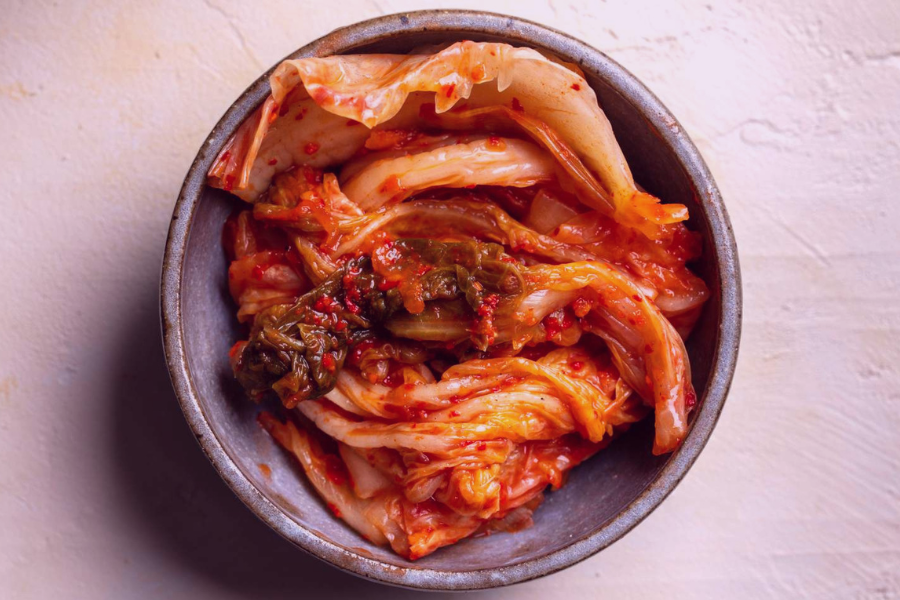
Let’s start with the celebrity of the bunch. When people say “kimchi,” this is usually the one they mean. It is made with napa cabbage, garlic, ginger, and gochugaru (Korean chili flakes). Baechu kimchi is that reliable friend who is always there, always flavorful, and goes with everything. From ramen to rice, this one is Korea’s ride-or-die.
Kkakdugi (Cubed Radish Kimchi)
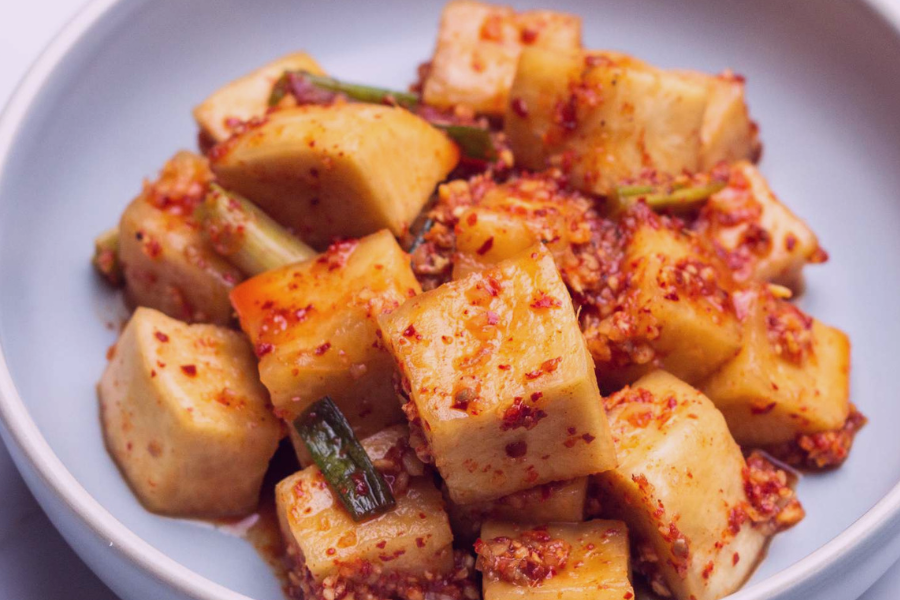
Up next? The crunchy royalty-cubed radish kimchi. Instead of cabbage, kkakdugi uses diced Korean radish seasoned with chili, garlic, and a salty seafood base. It has a satisfying bite and pairs especially well with soups and stews. It’s the kid danger that sometimes outshines Captain Man (IYKYK).
Nabak Kimchi (Water Kimchi)
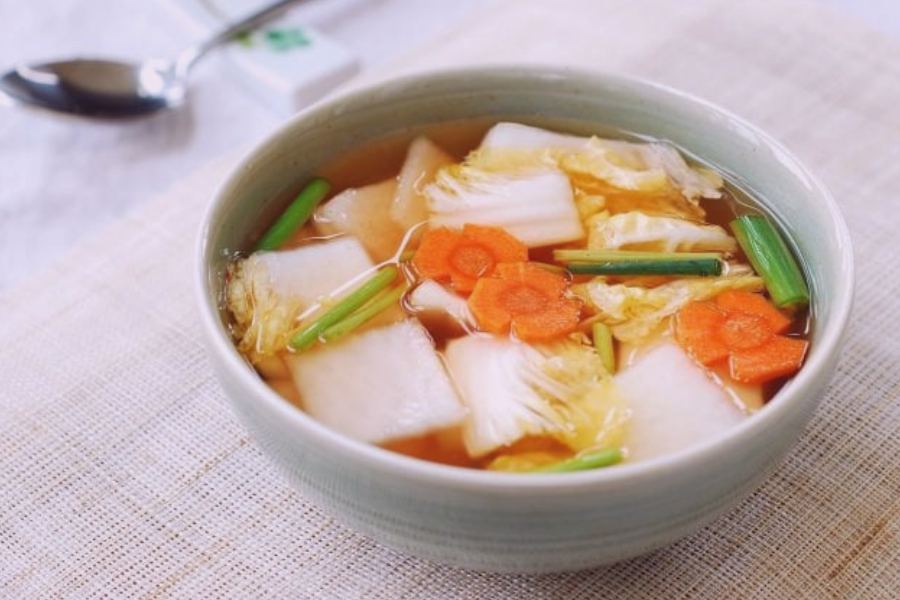
If kimchi could take a spa day, this would be it. Nabak kimchi is mild, refreshing, and made with thinly sliced radish and cabbage in a light, pinkish broth. It’s less spicy, more soothing, the perfect palate cleanser after something spicy or greasy. It’s cold, crunchy, and low-key addictive.
Chonggak Kimchi (Ponytail Radish Kimchi)
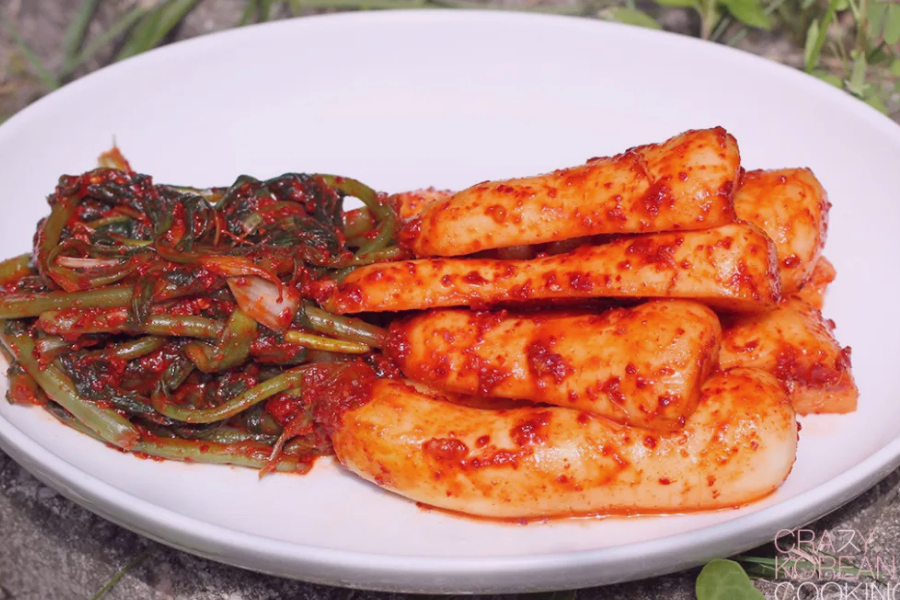
Chonggak Kimchi, also called “young radish kimchi,” is made with young ponytail radish that is distinguished for its crunchy texture. It’s crunchy, salty, and deeply flavorful. It’s the kind of kimchi that makes rice feel unnecessary. Traditionally eaten in the colder months, it’s a staple in homes that love a little extra bite.
Bossam Kimchi (Wrapped Kimchi)
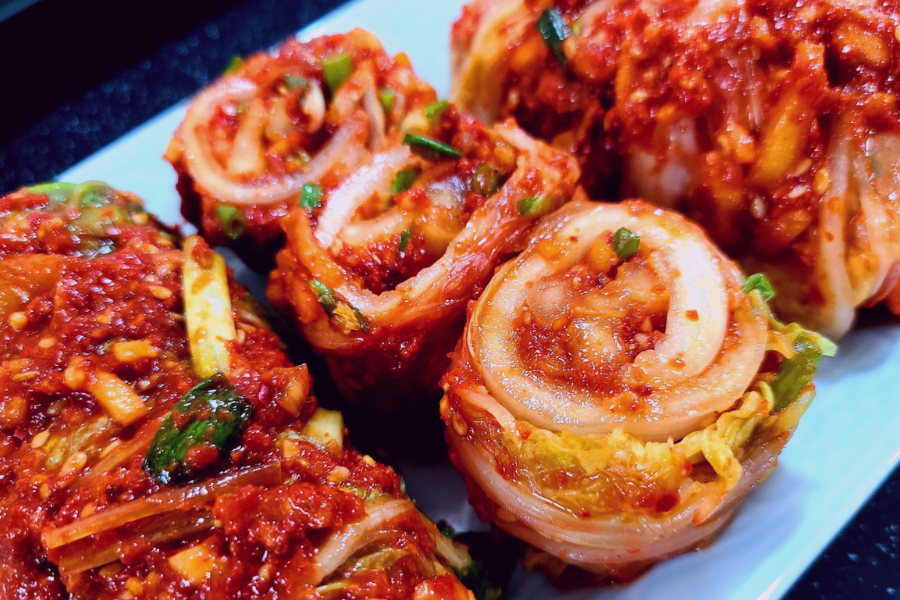
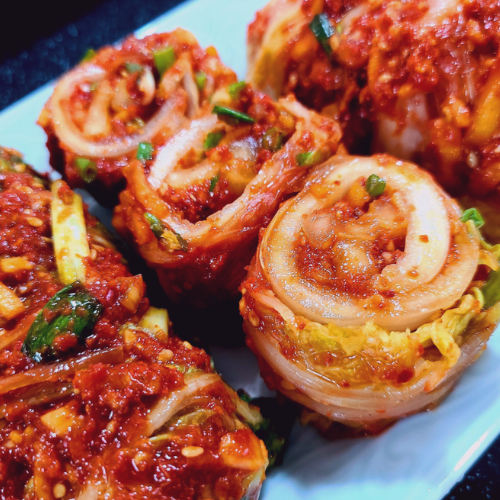
This is the fancy one, and it’s literally “wrapped kimchi.” It’s made by stuffing seasoned ingredients like chestnuts, pine nuts, pear, and even strips of seafood into large cabbage leaves, then wrapping them like gifts. It’s mild, elegant. Bossam kimchi is much more nutritious than ordinary kimchi made only from nappa cabbage and is mostly eaten on special occasion.
Gat Kimchi (Mustard Leaf Kimchi)
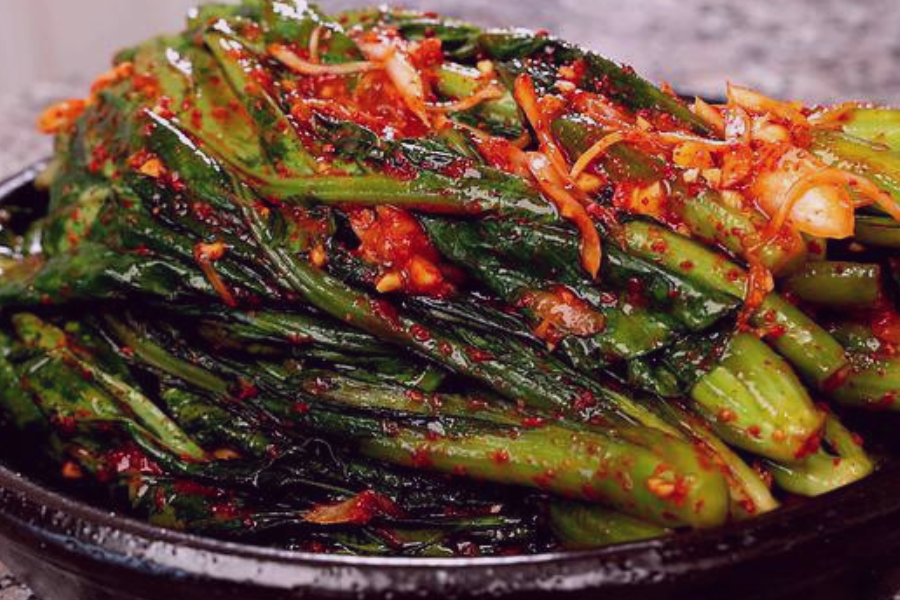
Made with mustard greens instead of cabbage, gat kimchi hits you with a spicy, tangy flavor that lingers (in a good way). It’s especially loved in the Jeolla province and is often paired with grilled fish or rice porridge. Definitely one for people who like bold, leafy flavors.
Baek Kimchi (White Kimchi)
If you think Kimchi has to burn your mouth for it to be kimchi, you’re wrong. Baek kimchi is that one that skips the chili powder entirely and focuses on garlic, pear, jujube, and pine nuts, giving a slightly sweet and tangy flavor. It’s kid-friendly, stomach-friendly, and surprisingly fancy for something so gentle.
Oi Sobagi (Cucumber Kimchi)
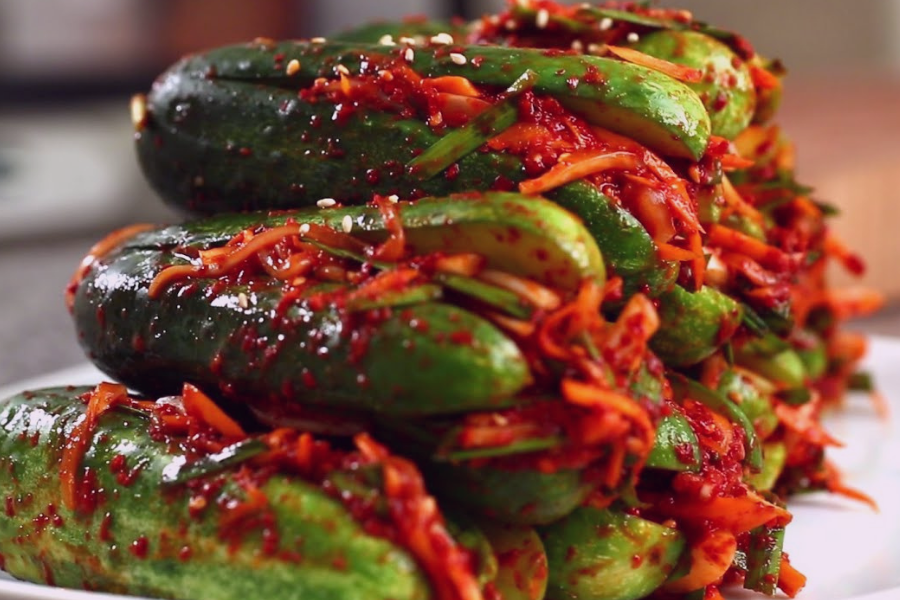
Cucumber Kimchi is summer’s favourite. It is made by stuffing cucumbers with chili, garlic, and green onions, giving it a fresh, crunchy, and spicy combo that hits differently on hot days. It’s light, juicy, and has the kind of crisp that will make you crave for more.
You already know Kimchi isn’t just food for Koreans; it’s a whole cultural language and will always remain one in Korean.
So tell me, as a foreigner, which variety of Kimchi have you tried and which one are you trying next?
Like Loading...

Author
T.Sapphire 💙
T. sapphire is a writer who found her love for the Hallyu wave after watching the historical drama “Jumong.” She is mainly interested in Korean dramas and the history of Korea at large. Explore her pieces as she takes you on a journey through K-Drama recommendations and keeps you informed about the history of the Korean people.




Leave a comment